EuroSys 2010
13th to 16th April 2010
Paris, France
Paris, France
















EuroSys 2010 is organised by EuroSys, the European Chapter of SIGOPS, sponsored by ACM SIGOPS.
The EuroSys conference series brings together professionals from academia and industry. It has a strong focus on systems research and development: operating systems, data base systems, real-time systems and middleware for networked, distributed, parallel, or embedded computing systems. As a highly recognized conference - rank 11 out of 581 in terms of 2007 CiteSeer impact factor - EuroSys has become a premier forum for discussing various issues of systems software research and development, including implications related to hardware and applications.
EuroSys 2010 will follow the pattern established by the previous EuroSys conferences, by seeking papers on all aspects of computer systems. EuroSys 2010 will also include a number of workshops to allow junior and senior members of the systems community to explore leading-edge topics and ideas before they are presented at a conference.
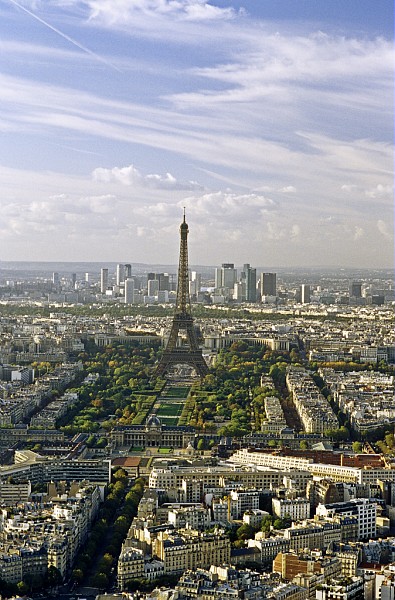
Paris is the economic and commercial capital of France. It is located on a loop of the Seine, in the center of the Paris basin, between the confluences of the Marne and the Seine upstream, and Oise and the Seine downstream. The density of its railway network, motorway and its airport structure, made Paris the convergence point for international transport. Known in the whole world for its monuments and its artistic and cultural life, Paris is also an important city in the history of the world, with a major political and economic impact. Symbol of the French culture, its animation and its large museums make it an attraction for nearly thirty million visitors per year. Paris is also regarded as one of the world capitals of the mode and the luxury. It is the most populated agglomeration in the European Union.
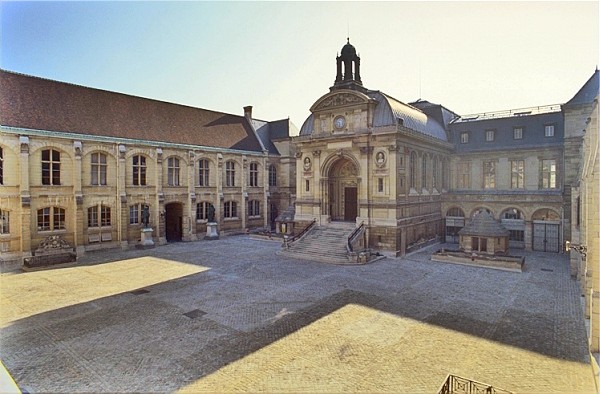
Eurosys 2010 will be held in The Conservatoire national des
Arts et Métiers (CNAM) which is a scientific, cultural and
professional corporation. Since its foundation by Henri Gregoire in
1794, it is dedicated to the training of adults along their
life. Placed under the supervision of the high education ministry, it
fulfils three missions: (1) the professional training of the adults,
(2) the technological research and the innovation, (3) the diffusion
of the scientific and technical culture. The CNAM is based for its
development on its network made up of 29 regional centers and several
teaching centers around the world (e.g. Lebanon, Germany, Benin,
Spain, Greece, Hungary, Romania, Morocco, etc). It is organized in 4
poles of teaching and research and nearly 30 specialities : (1)
Economy and management, (2) Sciences and industrial techniques, (3)
Communication and information sciences and technologies, (4) Work and
company. The CNAM research is based on a multi-field activity and on
the engagement of the companies: with researchers including 128
professors and 239 associate-professors; and approximately 2 000
external contributors, where 330 are Ph-D students. The CNAM, with its
Musée des Arts et Métiers, is a major actor of diffusion of the
scientific and technique culture: 350 events and conferences are open
to all; 50 000 participants in all France; 200 000 visitors of the
Musée.



 ACM Sigops France